
SHOP FAVORITES: THE BLANKS WE LOVE TO PRINT (AND WEAR)
Walk into the Colorcube Print Co. shop on any given Tuesday, and you’ll find more than just the hum of the dryer and the rhythmic "shuck-shuck" of the manual press. You’ll find a team of people who are genuinely obsessed with fabric. We don’t just see t-shirts as a canvas for your logo; we see them as pieces of gear that people: ourselves included: actually want to live in.
After years of pulling thousands of garments off the belt, we’ve developed some pretty strong opinions. We’ve seen which shirts hold their shape after fifty washes and which ones end up looking like a discarded dishcloth. We know which hoodies take embroidery like a champ and which ones are a nightmare to register.
When clients ask us, "What’s the best shirt for my brand?" the answer usually depends on the vibe they're after. But if you ask us what we wear when the shop lights go down, the list gets a lot more specific. Today, we’re opening up the vault and sharing the "Shop Preferred" collection: the blanks that make our jobs easier and your merch look like it came off a high-end retail rack.
The Vintage Vibe: Comfort Colors 1717
If you’re looking for that "I’ve owned this since 1994" feel without having to spend three years breaking it in, Comfort Colors is the undisputed king. Specifically, the 1717 Garment-Dyed Heavyweight T-Shirt.
What makes these special is the garment-dye process. Unlike traditional shirts where the yarn is dyed before the shirt is sewn, these are dyed after they’re fully constructed. This results in soft, muted tones and a slightly weathered look around the seams that screams authenticity. It’s a 6.1 oz, 100% ring-spun cotton beast that manages to be incredibly soft despite its weight.
From a Screen Printing perspective, Comfort Colors offers a unique challenge and a huge reward. Because of the way they are dyed, they can occasionally be prone to "dye migration," but when handled by a pro team, the result is a print that feels like it’s part of the fabric. It’s the perfect base for a "vintage-inspired" design or a minimalist chest hit. We love these for local coffee shops, outdoor brands, and anyone who wants their merch to feel like an immediate favorite.

The Modern Standard: ASColour Stencil Hoodie
When it comes to hoodies, there is a massive gap between "good" and "great." A "good" hoodie is fine for a giveaway, but a "great" hoodie becomes the only thing you wear from October to April. The ASColour Stencil Hoodie is, in our humble opinion, the greatest blank hoodie on the market right now.
ASColour is an Australian brand that has absolutely disrupted the US market by focusing on premium quality and ethical sourcing. The Stencil Hoodie (Style 5102) is a 350 GSM (heavyweight) blend of 80% cotton and 20% recycled polyester. It has a modern, structured fit that isn't too baggy but doesn't feel restrictive. The "anti-pill" fleece means it stays smooth and professional-looking even after heavy use.
Why do we love it in the shop? The surface. The cotton face of ASColour garments is incredibly tight and smooth, which is a dream for high-detail screen prints. But where this hoodie really shines is our Embroidery department. The density of the fabric allows for heavy stitch counts without the puckering you see on cheaper, thinner blanks. Whether we’re doing a 3D puff embroidery or a subtle tonal logo, the Stencil Hoodie provides a stable, premium foundation that elevates the entire project.

The Workhorse: Bayside Pocket Tee
Not every shirt needs to be a fashion statement. Sometimes, a shirt needs to be a tool. For our contractors, landscapers, and blue-collar crews, we almost always point them toward the Bayside Pocket Tee.
Bayside is a brand that leans hard into the "Made in the USA" ethos, and their construction reflects that. These are rugged, heavy-duty shirts that can take a beating on a job site. The pocket isn't just for show; it’s reinforced to handle pens, screws, or whatever else you’re hauling around.
In the shop, we appreciate the Bayside 5100 because it’s a "true-to-size" American fit. It’s got a bit more room in the shoulders and a longer body, which is exactly what you want when you’re actually working. When we screen print on these, we tend to go with high-opacity plastisol inks that can withstand the rigors of industrial laundry and heavy UV exposure. If you’re looking to outfit a crew that actually gets their hands dirty, this is the one.
Why the Blank Matters
You might be thinking, "It’s just a shirt, right?" Wrong. The blank you choose is 50% of the final product’s value. You could have the most incredible, award-winning graphic design in the world, but if you print it on a scratchy, ill-fitting "value" tee, no one is going to wear it.
When you choose a "shop preferred" blank, you’re investing in longevity. You’re making sure that your brand stays in the "top of the drawer" rotation. That’s how you get the best ROI on your merch: by making sure people actually put it on their bodies.
At Colorcube Print Co., we’ve curated this collection because we want our work to last. We take pride in every squeegee pull and every needle drop, and it hurts our souls to see good work go onto bad fabric. Whether you’re looking for a custom merch strategy or just a quick run of shop tees, starting with a quality blank is the first step toward success.
In-House Excellence: Screen Printing & Embroidery
Everything we do is handled right here under our roof. We aren't some middle-man website that farms out your order to the lowest bidder in another state. When you work with us, you’re working with the people who are actually mixing the ink and hooping the garments.
Our Screen Printing setup is designed for precision. We use high-mesh screens for detailed work and premium inks that offer a soft hand-feel. For our hoodies and heavier blanks, we ensure the cure temps are perfect so your design doesn’t crack or peel.
Our Embroidery department is where we get to show off our attention to detail. We digitize designs in-house, ensuring that every stitch direction and thread color is optimized for the specific fabric we’re working on. A Bayside pocket tee requires a different approach than an ASColour hoodie, and we have the expertise to navigate those nuances.

Let’s Build Your Collection
Choosing the right garment can feel overwhelming. There are thousands of options out there, but you don't have to navigate them alone. We’ve done the legwork, we’ve worn the samples, and we’ve seen the results.
If you’re ready to stop settling for "standard" and start creating "shop preferred" merch, we’re here to help. Whether you need a rugged workwear set or a high-end retail line, our team can guide you to the perfect fabric for your vision.
Ready to get started? Head over to our Quote Page to tell us about your project, or check out our Services Index to see the full range of what we can do. If you’re a returning client looking to restock those favorites, you can hit up the Reorder Form and we'll get the presses rolling.
At Colorcube Print Co., we don't just print shirts. We build the gear that defines your brand. Let's make something iconic together.
Looking For Custom Merch? Here Are 10 Things You Should Know Before Ordering
So you're ready to order custom merch. Maybe you're launching band tees for your next tour, getting branded workwear for your crew, or finally putting your logo on something people will actually wear. Whatever it is, we're stoked for you.
But before you hit that "submit order" button, let's talk real talk. There are some things you absolutely need to know to avoid ending up with a box full of regret. As a SoCal-based print shop that's worked with everyone from local contractors to touring bands, we've seen it all, the good, the bad, and the "wait, this isn't what I ordered."
Here are 10 things you need to know before ordering custom merch.
1. Vector vs. Raster: Your Artwork Matters (A Lot)
Let's keep this simple because it doesn't need to be complicated. There are two types of image files: vector and raster.
Vector files (like .AI, .EPS, or .SVG) are made of mathematical paths and can scale infinitely without losing quality. Think of them as the superhero of design files, they look sharp at any size.
Raster files (like .JPG or .PNG) are made of pixels. They're fine for Instagram, but when you blow them up to print on a shirt? They get pixelated and blurry real fast.
The bottom line: If you want your logo to look crisp and professional, you need vector artwork. If you only have a raster file, make sure it's high resolution, we'll talk more about that in a minute. And please, for the love of all things printable, don't send us a screenshot from your website.
2. Not All Blank Apparel Is Created Equal
Here's the thing: the blank tee you choose matters just as much as the design on it. A killer print on a cheap, scratchy shirt is still a cheap, scratchy shirt.
At Colorcube, we're big fans of quality blanks. We work with brands like ASColor, Comfort Colors, and LA Apparel, all made with better fabrics, better fits, and better ethics. Yeah, they cost a bit more than your basic Gildan, but your customers (or your crew) will actually want to wear them. And isn't that the whole point?
Think about who's wearing this merch. Contractors need durable workwear that can handle job sites. Bands need soft, comfortable tees that fans will wear to the next show. Local businesses need polished polos that don't shrink into crop tops after one wash.
Choose blanks that match your vibe and your budget, but don't cheap out on quality.
3. Print Locations: Think Beyond the Chest
Most people default to a chest print or a big design on the front. Cool, classic, no problem. But there's a whole shirt (or hat, or hoodie) to work with here.
Consider adding:
Left chest prints for a subtle, professional look (perfect for work uniforms)
Back prints for making a statement when you walk away
Sleeve prints for that extra detail fans notice
Inside neck labels to make it feel custom and official
For hats, don't forget about side or back embroidery. For hoodies, sleeve cuffs or hood prints can add that extra fire. Get creative. Stand out. That's what custom merch is all about.
4. Minimum Order Quantities: Yes, They Exist
Here's the deal: most print shops (including us) have minimum order quantities, especially for screen printing. Why? Because there's setup involved, burning screens, mixing inks, dialing in the press. It doesn't make economic sense to do all that for just one shirt.
For screen printing, our minimums usually start at 24 pieces per design. But if you need smaller quantities or a one-off sample, embroidery or DTF (direct-to-film) might be better options with lower minimums.
Plan ahead and know your quantity before reaching out for a quote. And if you're not sure how many sizes you need, do yourself a favor and actually ask people their sizes rather than guessing. Nothing's worse than 30 mediums and zero XLs.
5. Screen Printing vs. Embroidery: Which One's Right for You?
Both methods are awesome, but they serve different purposes.
Screen printing is ideal for:
Larger quantities (24+ pieces)
Bold, vibrant designs
T-shirts, hoodies, tote bags
Band merch and event tees
Embroidery is perfect for:
Professional workwear and corporate gear
Polos, hats, jackets
Designs with fine detail and texture
A more upscale, polished look
Screen printing gives you vivid colors and works great on soft fabrics. Embroidery adds dimension and durability, it won't fade or crack. If you're outfitting a crew of contractors, embroidered polos are the move. If you're selling merch at shows, screen-printed tees are your bread and butter.
Not sure which to choose? Hit us up, we'll help you figure it out.
6. High-Res Files Are Non-Negotiable
We touched on this earlier, but it's worth repeating: your artwork needs to be high resolution. For raster images, that means 300 DPI (dots per inch) at the actual print size.
If you send us a 72 DPI logo you pulled off your website, it's going to look pixelated and fuzzy. We can't magically make a low-res file sharp, that's just not how printing works.
Save yourself the headache and the back-and-forth emails. Get your designer to send over proper files from the jump. If you don't have vector files or high-res images, we offer in-house design services to clean things up or recreate your logo. Problem solved.
7. Turnaround Times: Let's Be Realistic
We get it, you needed it yesterday. But here's the truth: good printing takes time. From artwork approval to production to shipping, you're typically looking at 2-3 weeks for most orders.
Rush jobs? They're possible, but they cost extra and aren't always guaranteed depending on our production schedule.
Do yourself a favor and plan ahead. Don't wait until the week before your event to order 100 tees. Give yourself buffer time for artwork tweaks, proofs, production, and shipping delays (because, you know, life happens).
If you're local to SoCal, you can always pick up your order in person, which shaves off shipping time. But still, start early.
8. Why In-House Design at Colorcube Matters
Not everyone has a designer on deck, and that's totally fine. That's why we offer in-house design services.
Here's why that matters: when your designer and your printer are the same team, everything runs smoother. We know exactly what files we need for production. We understand print limitations and how to make your design look killer on fabric. There's no game of telephone between you, your designer, and your printer.
Whether you need a logo cleaned up, a full merch design from scratch, or just some tweaks to make your artwork print-ready, we've got you covered. It's all part of making sure your merch turns out exactly how you envisioned it.
9. Budget for More Than Just the Shirt Price
Let's talk money. When you're budgeting for custom merch, remember that the per-shirt cost isn't the only expense.
Factor in:
Setup fees (for screen printing, we burn screens for each color)
Artwork and design time (if you need help with files)
Shipping costs (unless you're picking up locally)
Rush fees (if you're on a tight deadline)
Samples (always smart to order a sample first if it's a big run)
A $10 shirt might actually cost $15-$18 when everything's said and done. Get a detailed quote upfront so there are no surprises when the invoice hits. We break down all costs clearly so you know exactly what you're paying for.
10. Shipping vs. Local Pickup: What's Your Move?
If you're here in Southern California, you're in luck, local pickup is fast, free, and lets you inspect your order in person before you leave. Plus, you get to meet us, check out the shop, and maybe talk shop about your next project.
If you're outside the SoCal area, shipping is the way to go. Just factor in shipping time (usually 3-5 business days depending on your location) and costs. We pack everything carefully to make sure it arrives in perfect condition.
And hey, if you're planning a big event or tour and need your merch shipped somewhere specific, let us know: we'll work it out.
Ready to order? Now you know what goes into getting custom merch done right. Whether you're a band printing tour tees, a contractor outfitting your crew, or a local business building your brand, we're here to help make it happen.
Check out our services, grab a quote, or just reach out and say hi. We're always down to talk merch, printing, and making your vision come to life: one shirt (or hat, or hoodie) at a time.
Stuck on Merch? 25+ Ideas for Small Businesses
It all begins with an idea.
Merch isn't just for mega brands anymore. Small businesses are flipping clean design into louder awareness, extra revenue, and stronger fan energy. So where do you start?
If the canvas is blank and your brain's buffering, you’re in the right spot. We pulled 25+ proven ideas that slap for small biz—from budget-friendly to premium drops that people actually pay for. When you’re ready, Colorcube Print Co takes you from spark to finished product with in-house design, screen printing, embroidery, and signage—yep, all under one roof.
Why Custom Merch Hits Different
Before we dive in, here’s the play: good merch isn’t just a logo slap. It’s a walking billboard, an icebreaker, a “where’d you get that?” moment. That’s how we roll at Colorcube Print Co—design and production moving together in-house so your drop looks crisp and lands on time.
Small businesses have the edge—more personal, more nimble, more dialed to your own crowd. You don’t need millions; you just need your community saying “say less.” When you need a crew, Colorcube Print Co can sketch, mock up, and produce it all in one spot.
Wearables That Go Hard
1. Custom T-Shirts
The day-one classic. Tees are cheap to run, everyone rocks them, and you’ve got tons of canvas to play with. Go soft-blend or vintage cuts to dodge that stiff corporate vibe. For blanks, ASColor is a killer pick for a clean, modern fit; our in-house go-tos also include Comfort Colors and LA Apparel for rich color and that broken-in feel. Colorcube Print Co will help you pick the right garment and handle artwork + screen printing under one roof.
2. Hoodies and Sweatshirts
Hoodies are the uniform. People live in these—airport, class, late-night runs. Go heavyweight, oversized, or cropped and watch the loyalty build itself.
3. Baseball Caps and Beanies
Caps and beanies are high-vis and low-effort. Great for outdoor crews, sports, or any brand with a laid-back, come-hang energy.
4. Custom Socks
Statement socks are in. Cheap to produce, fun to design, and people geek out over a good pattern. Perfect for subscriptions or surprise-and-delight packs.
5. Performance Wear
Performance gear hits for fitness brands, wellness crews, or anyone tapping into that active-life energy—breathable, durable, ready for sweat.
Everyday Carry Essentials
6. Reusable Tote Bags
Totes aren’t just grocery runs—they’re part of the fit. Eco-friendly, useful, and basically portable billboards around town.
7. Water Bottles and Tumblers
Hydration is the move. Custom bottles and tumblers last forever and put your brand in hand all day.
8. Custom Mugs
Morning ritual approved. Mugs give you big design real estate and daily face time. Perfect for cafes, bookstores, and any brand trying to live in that AM routine.
9. Phone Cases
Phones are glued to us, so cases = nonstop impressions. Great for tech, artists, and brands with loud visuals.
10. Notebooks and Journals
Notebooks feel personal and premium—especially with quality stock and unique covers. Crushes for education, wellness, or pro services.
Desk + Tech Accessories
11. Custom Pens
Still a budget MVP. Pick pens people actually like using, and make sure your info’s there without looking spammy.
12. Laptop Stickers
Sticker your laptop, water bottle, life—cheap to make, high on clout. Perfect for students and creatives.
13. Mouse Pads
Mouse pads stay parked on the desk forever. Big design space, daily visibility.
14. USB Drives
Solid for B2B and tech. Preload with lookbooks, catalogs, or secret drops for extra value.
15. Desk Accessories
Desk organizers, pen cups, paperweights—clean look, constant visibility in pro spaces.
Home + Lifestyle Vibes
16. Blankets and Throws
Blankets = instant cozy. Great seasonal drops and perfect for home decor, wellness, or family-focused brands.
17. Coasters
Coasters are tiny workhorses—cheap, used daily. Ideal for restaurants, bars, or any brand vibing with chill time.
18. Custom Candles
Candles bring premium vibes without wrecking the budget. Clean labels on quality pours feel luxe in-hand.
19. Kitchen Accessories
Kitchen gear—boards, spice jars, dish towels—keeps your brand in the middle of daily life. Perfect for food and cooking brands.
20. Keychains
Low cost, high mileage. Clever keychains turn into convo starters and daily brand reminders.
Creative + Offbeat Picks
26. Custom Puzzles
Great for family brands, entertainment, or any strong visual identity. Fun to build, fun to share, and they keep you top-of-mind.
27. Custom Stickers
Cheap, versatile, everywhere. Artists, bands, food trucks—stickers make your art travel.
28. Magnets
Magnets live on fridges and files forever—constant visibility. Clutch for service businesses that need contact info front and center.
29. Custom Pins and Badges
Pins and badges build community fast. Collectible, IG-friendly, and perfect for drops and events.
Pick Smart, Keep It Tight
Not every item is your item. Here’s how to choose without wasting budget:
Consider Your Audience: Lawyers? Go pro with pens and notebooks. Surf shop? Water bottles and tees all day.
Think About Usage: If it gets used, it works. If it lives in a drawer, it doesn’t.
Quality Matters: One premium piece > ten throwaways. Match the quality to your brand.
Start Small: Test one or two pieces, read the vibes, then scale.
Budget Realistically: Count design, setup, and MOQs. Fewer, better items beat a pile of meh.
Getting Started
Ready to spin up your first drop? Pick 2–3 items that fit your brand and your people. Think about what they’ll actually use—and want to flex. Colorcube Print Co designs and produces in-house, so you go from idea to shelf fast.
Remember: good merch tells your story and brings real value. Not just a logo on stuff—pieces people use, keep, and show off.
Start small. Choose one item, keep the design tight, run a small batch, then learn and scale.
Yeah, it can feel like a lot—but merch keeps your brand visible and builds real connection. Invest in quality and it pays you back. Colorcube Print Co keeps it simple—full-service, one roof.
Which ideas are calling your name? Dial into what your people value, then put your spin on it. When you’re ready, snag a quick quote from Colorcube Print Co or pull up to the shop—design and production all in one spot. www.colorcubecreative.com

Band Merch Secrets Revealed: What Music Industry Experts Don't Want You to Know
Band Merch Secrets Revealed: What Music Industry Experts Don't Want You to Know

Ever wonder why some bands make bank selling t-shirts while others can barely cover their gas money? After working with hundreds of musicians over the years, we've seen what separates the pros from the amateurs when it comes to merchandise strategy. Spoiler alert: it's not just about having cool designs.
The global music merchandising market is projected to hit $16.3 billion by 2030, and there are some industry secrets that can help your band grab a bigger slice of that pie. Let's dive into what the successful artists are doing behind the scenes.
The Partnership Game That Changed Everything
Here's something most bands don't realize: the real money isn't in selling merch: it's in getting other brands to pay you to wear theirs. Back in 1986, Run DMC completely changed the game when they partnered with Adidas for "My Adidas." They weren't just selling shoes; they were creating a cultural moment that made everyone money.
Today's smart artists follow this blueprint from day one. Drake's got Nike deals, Travis Scott collaborates on sneaker drops, and even smaller artists are partnering with local businesses for limited runs. The secret? Don't wait until you're famous to start thinking about partnerships. Approach local skateboard shops, coffee roasters, or breweries early in your career.
The Scarcity Mindset That Drives Sales
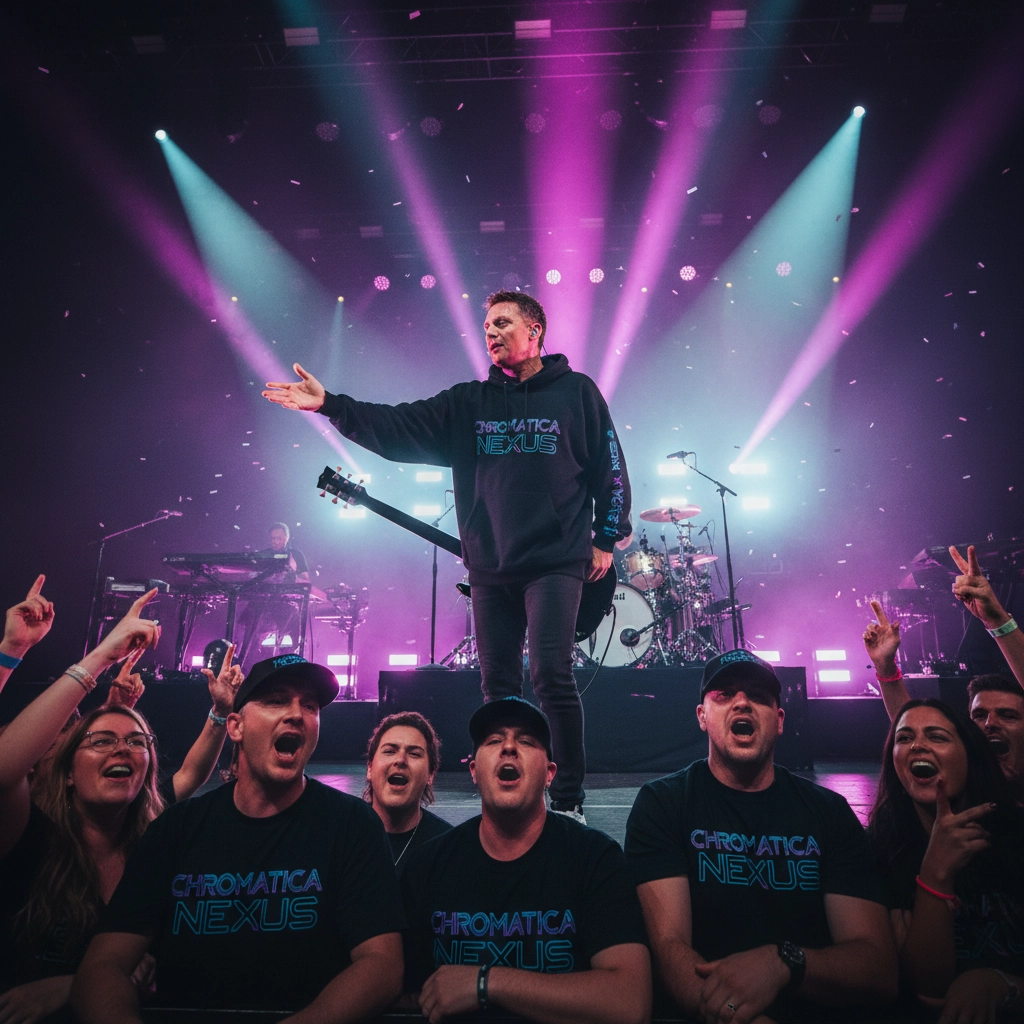
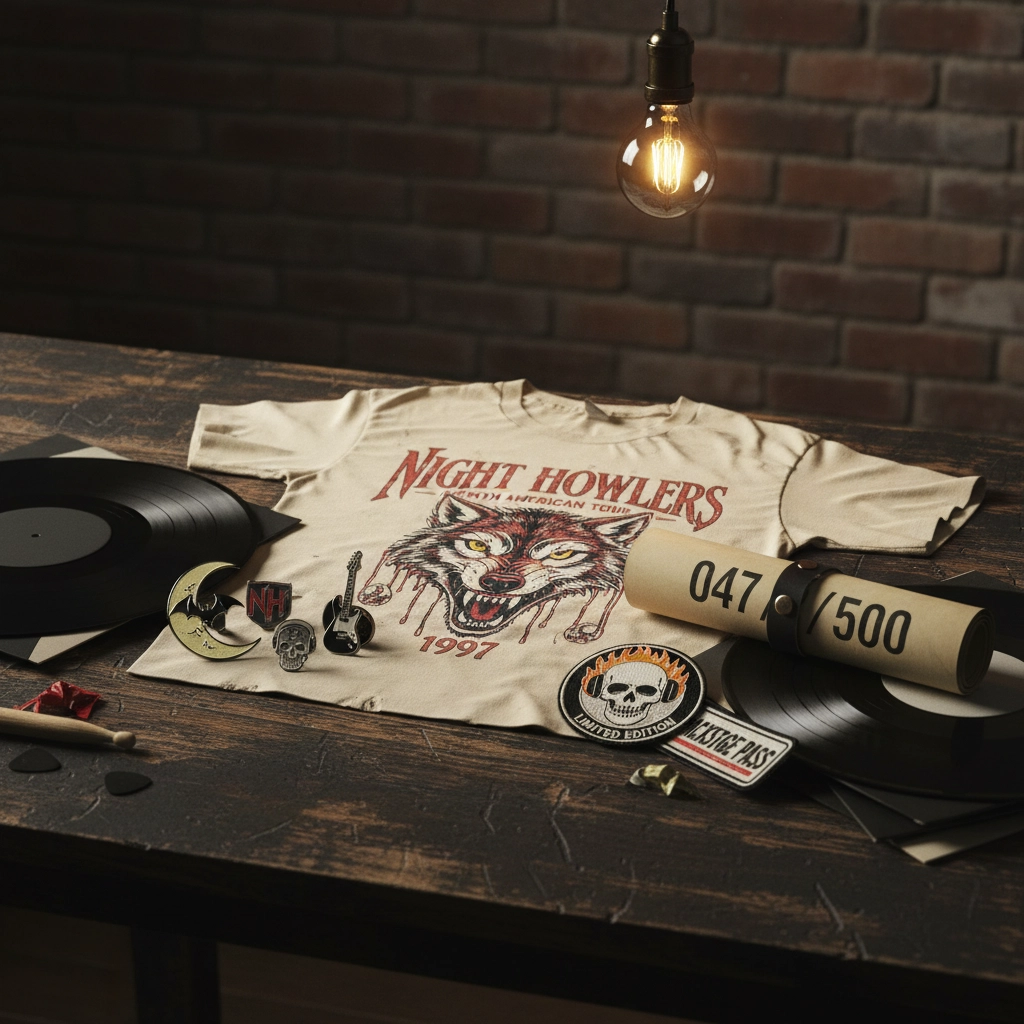
Want to know why fans will pay $40 for a tour shirt they could get online for $25? Artificial scarcity. The bands making serious merch money aren't just selling products: they're selling experiences and exclusivity.
Limited tour-specific designs, city-exclusive colorways, and "tonight only" bundles create urgency that online stores simply can't match. When fans know they can't get that exact shirt anywhere else, they'll open their wallets. We've seen bands sell out of inventory in the first three songs of their set because they positioned their merch as collectible from the start.
The psychological trigger is simple: people want what they can't have. Make your merch feel exclusive, and fans will treat it like treasure.
The Multi-Channel Revenue Strategy
Here's where most bands mess up: they think one size fits all. Your venue merch strategy should be completely different from your online approach, which should be different from your festival game plan.
At venues: Focus on impulse buys with simple designs and multiple price points. Have $10 stickers, $15 patches, $25 shirts, and $40 hoodies. Cast a wide net.
Online: This is where you can get creative with detailed designs, special packaging, and pre-orders. Your hardcore fans will buy here regardless of price.
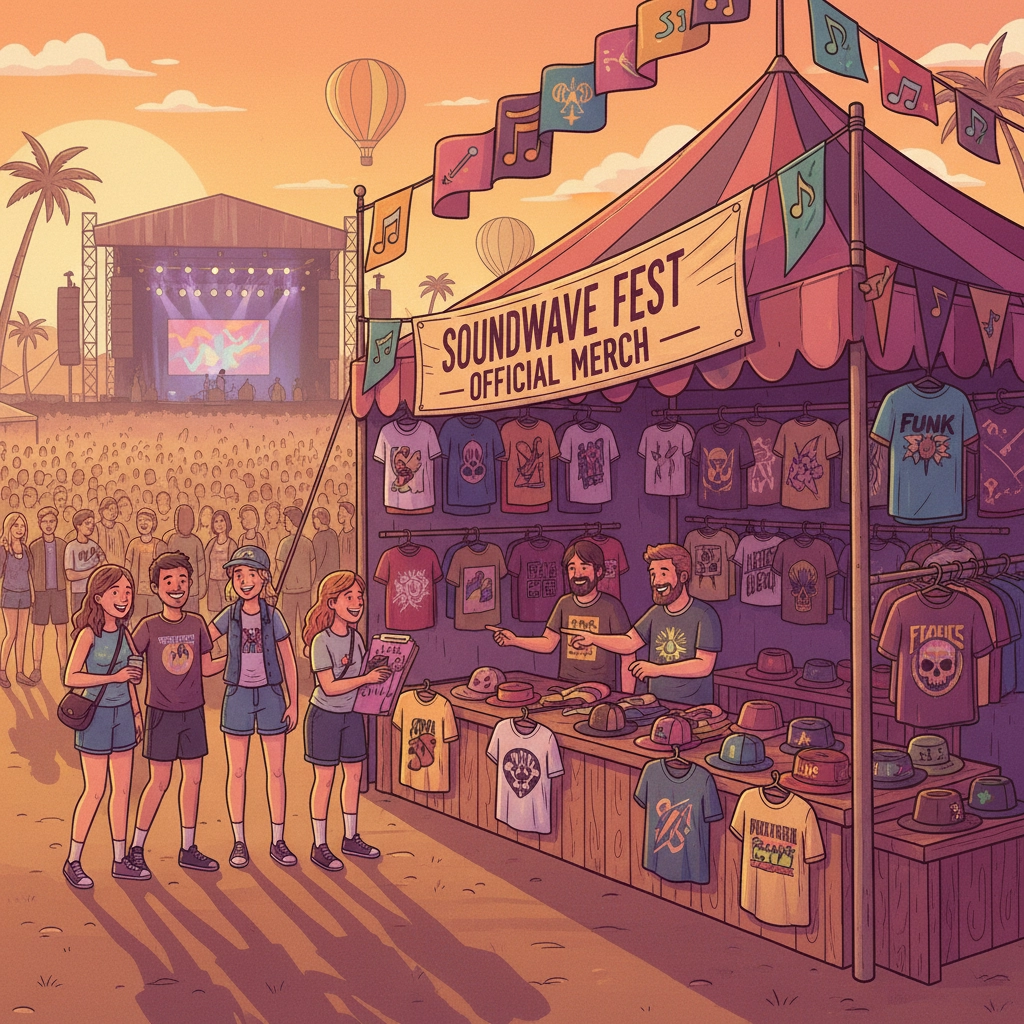
Festivals: Go big or go home. Festival crowds want statement pieces they can wear to other shows. Bold designs and premium materials win here.
Smart bands track which designs sell where and adjust their inventory accordingly. That floral design might bomb at a metal festival but fly off the table at an indie venue.
The Human Element Everyone Ignores
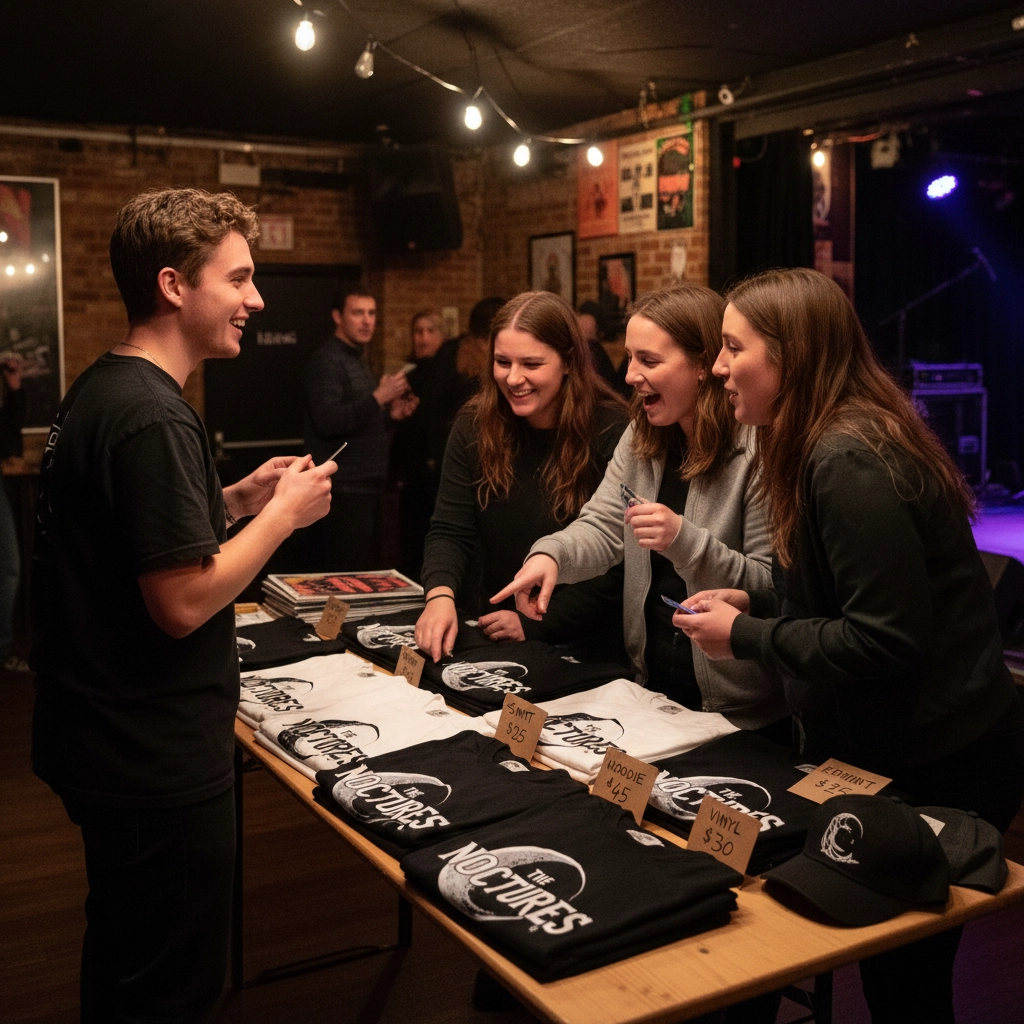
This might sound obvious, but you'd be shocked how many bands set up their merch table and then abandon it during their set. Always have someone working your table: preferably someone who knows your music and can connect with fans.
The difference between a staffed table and an empty one isn't just theft prevention (though that's important). It's about creating connections. When someone enthusiastic about your band helps a fan find the right size or suggests a bundle deal, sales skyrocket.
We've seen bands double their merch sales just by having their bassist's girlfriend work the table instead of leaving it unattended. Personal interaction converts browsers into buyers.
The Bundle Psychology That Boosts Revenue
Here's a secret from successful touring acts: fans on a budget will still buy if you make them feel like they're getting a deal. Strategic bundling isn't about desperation: it's about value perception.
Instead of just selling a $25 shirt, offer:
- Shirt + sticker pack for $28
- Any two items for $35
- Full album download with any purchase
This approach serves two purposes: it increases your average transaction value and makes fans feel like they're getting insider access to better deals. Frame it as "cutting fans a deal" rather than trying to move inventory, and you'll see the difference in response.
The Quality vs. Cost Balance Nobody Talks About
Here's the harsh truth: your merch is a reflection of your brand, and cheap, poorly printed shirts make your band look amateur. But that doesn't mean you need to break the bank on premium everything.
The secret is understanding where to invest. Your main design: the one that represents your band's core identity: should be printed on quality blanks with professional techniques. Those throwaway tour-specific designs? You can use cheaper options since fans expect them to be more disposable.
We always tell our band clients to think of their main shirt design like their business card. It needs to last, look professional, and represent what they're about. Everything else is just revenue optimization.
The Community Angle That Modern Bands Miss
Gen Z fans make purchasing decisions based on brand values, with 68% considering a company's real-world impact before buying. Your merch isn't just merchandise: it's a way for fans to publicly align with your message and join your community.
The bands crushing it right now understand that selling a shirt isn't about the shirt. It's about selling belonging. When someone wears your merch, they're broadcasting their membership in your world. Make that world worth joining.
The Channel Strategy That Maximizes Reach
Don't put all your eggs in the venue basket. The most successful bands we work with use a three-pronged approach:
Physical venues for immediate post-show emotional purchases, online stores for detailed browsing and discovery, and pop-up opportunities at festivals, record stores, and local events for community building.
Each channel serves different fan behaviors and purchase motivations. The key is tailoring your approach rather than copy-pasting the same strategy everywhere.
The Long-Term Brand Building Secret
Here's what separates bands that make merch money for a few years from those who build lasting merchandise empires: consistency in brand identity. Look at bands like Pink Floyd, The Grateful Dead, or more recently, Twenty One Pilots: their merch aesthetic is instantly recognizable decades later.
Invest in developing a visual identity that can evolve while staying true to your core brand. Your merch should tell your story, not just display your logo.
The real secret to merchandise success isn't one magic formula: it's understanding that merch is storytelling, community building, and smart business rolled into one. When you nail all three aspects, that's when the magic happens.
Ready to level up your band's merchandise game? The difference between amateur and professional merch often comes down to working with people who understand both the music industry and quality printing. Get a quote and let's talk about bringing your vision to life with merchandise that actually moves.

Blog Post Title Three
It all begins with an idea.
It all begins with an idea. Maybe you want to launch a business. Maybe you want to turn a hobby into something more. Or maybe you have a creative project to share with the world. Whatever it is, the way you tell your story online can make all the difference.
Don’t worry about sounding professional. Sound like you. There are over 1.5 billion websites out there, but your story is what’s going to separate this one from the rest. If you read the words back and don’t hear your own voice in your head, that’s a good sign you still have more work to do.
Be clear, be confident and don’t overthink it. The beauty of your story is that it’s going to continue to evolve and your site can evolve with it. Your goal should be to make it feel right for right now. Later will take care of itself. It always does.

Blog Post Title Four
It all begins with an idea.
It all begins with an idea. Maybe you want to launch a business. Maybe you want to turn a hobby into something more. Or maybe you have a creative project to share with the world. Whatever it is, the way you tell your story online can make all the difference.
Don’t worry about sounding professional. Sound like you. There are over 1.5 billion websites out there, but your story is what’s going to separate this one from the rest. If you read the words back and don’t hear your own voice in your head, that’s a good sign you still have more work to do.
Be clear, be confident and don’t overthink it. The beauty of your story is that it’s going to continue to evolve and your site can evolve with it. Your goal should be to make it feel right for right now. Later will take care of itself. It always does.