
Band Merch Secrets Revealed: What Music Industry Experts Don't Want You to Know
Ever wonder why some bands make bank selling t-shirts while others can barely cover their gas money? After working with hundreds of musicians over the years, we've seen what separates the pros from the amateurs when it comes to merchandise strategy. Spoiler alert: it's not just about having cool designs.
The global music merchandising market is projected to hit $16.3 billion by 2030, and there are some industry secrets that can help your band grab a bigger slice of that pie. Let's dive into what the successful artists are doing behind the scenes.
The Partnership Game That Changed Everything
Here's something most bands don't realize: the real money isn't in selling merch: it's in getting other brands to pay you to wear theirs. Back in 1986, Run DMC completely changed the game when they partnered with Adidas for "My Adidas." They weren't just selling shoes; they were creating a cultural moment that made everyone money.
Today's smart artists follow this blueprint from day one. Drake's got Nike deals, Travis Scott collaborates on sneaker drops, and even smaller artists are partnering with local businesses for limited runs. The secret? Don't wait until you're famous to start thinking about partnerships. Approach local skateboard shops, coffee roasters, or breweries early in your career.

The Scarcity Mindset That Drives Sales
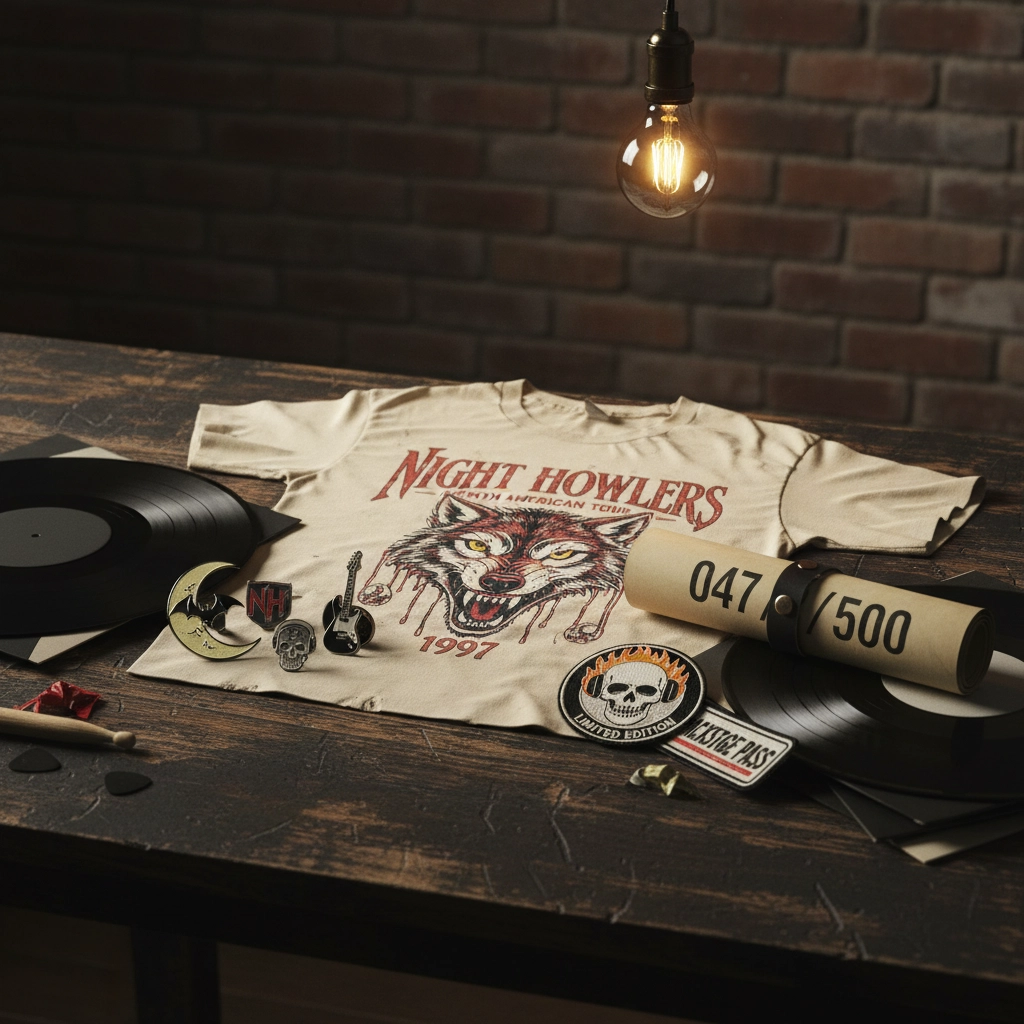
Want to know why fans will pay $40 for a tour shirt they could get online for $25? Artificial scarcity. The bands making serious merch money aren't just selling products: they're selling experiences and exclusivity.
Limited tour-specific designs, city-exclusive colorways, and "tonight only" bundles create urgency that online stores simply can't match. When fans know they can't get that exact shirt anywhere else, they'll open their wallets. We've seen bands sell out of inventory in the first three songs of their set because they positioned their merch as collectible from the start.
The psychological trigger is simple: people want what they can't have. Make your merch feel exclusive, and fans will treat it like treasure.
The Multi-Channel Revenue Strategy
Here's where most bands mess up: they think one size fits all. Your venue merch strategy should be completely different from your online approach, which should be different from your festival game plan.
At venues: Focus on impulse buys with simple designs and multiple price points. Have $10 stickers, $15 patches, $25 shirts, and $40 hoodies. Cast a wide net.
Online: This is where you can get creative with detailed designs, special packaging, and pre-orders. Your hardcore fans will buy here regardless of price.
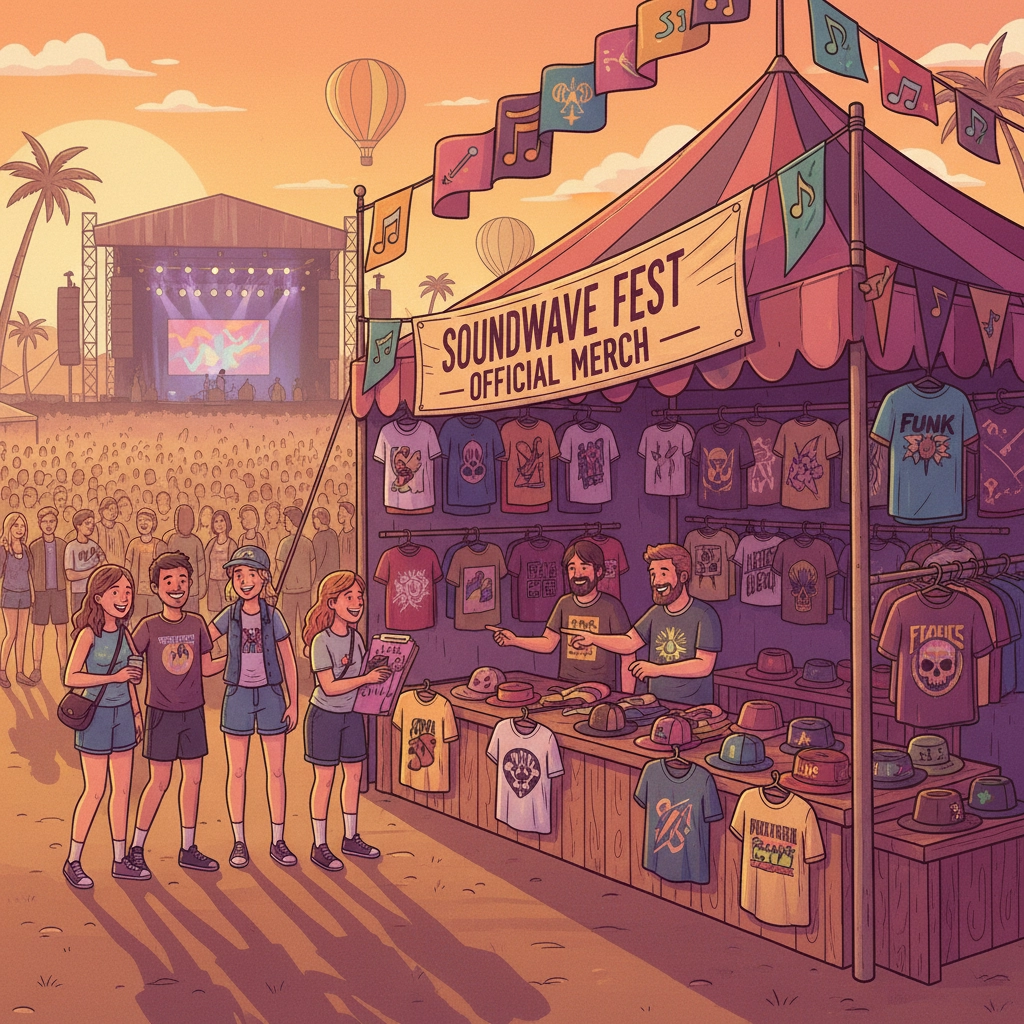
Festivals: Go big or go home. Festival crowds want statement pieces they can wear to other shows. Bold designs and premium materials win here.
Smart bands track which designs sell where and adjust their inventory accordingly. That floral design might bomb at a metal festival but fly off the table at an indie venue.
The Human Element Everyone Ignores
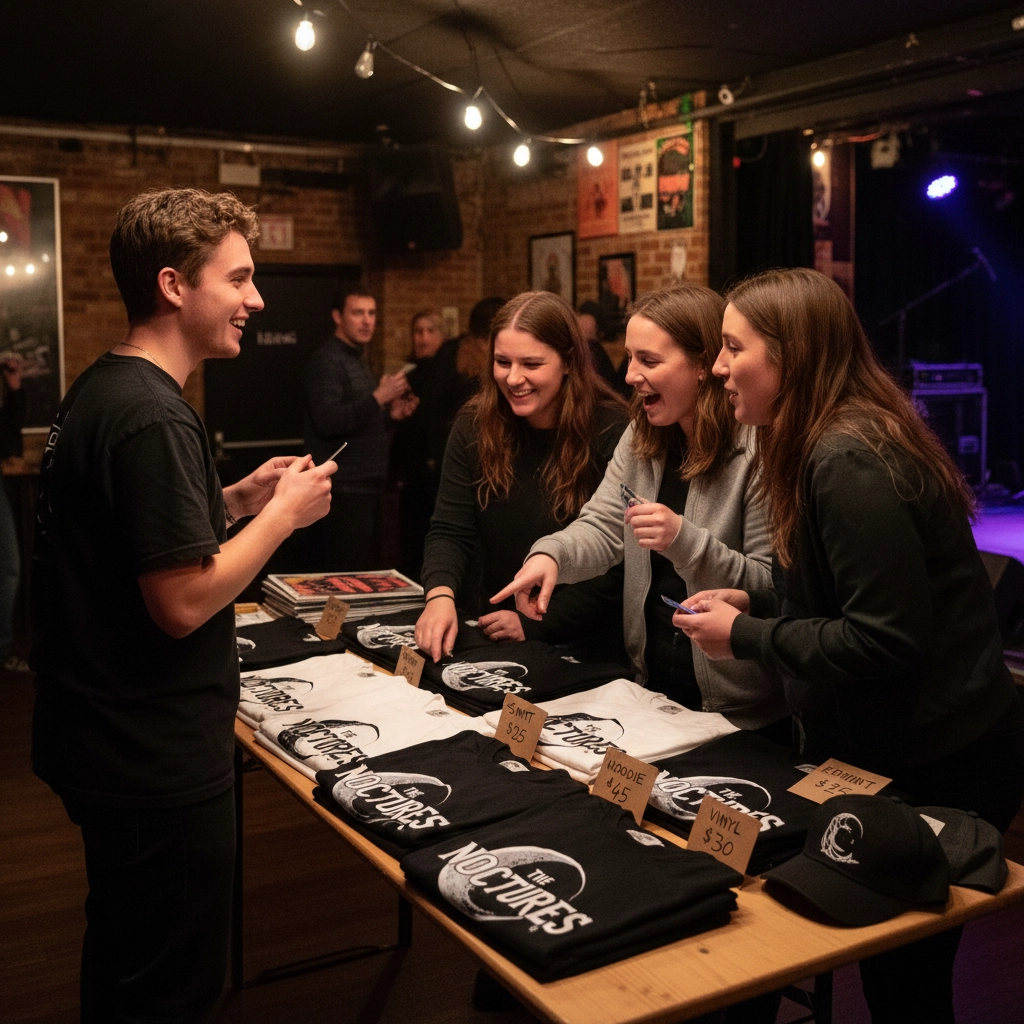
This might sound obvious, but you'd be shocked how many bands set up their merch table and then abandon it during their set. Always have someone working your table: preferably someone who knows your music and can connect with fans.
The difference between a staffed table and an empty one isn't just theft prevention (though that's important). It's about creating connections. When someone enthusiastic about your band helps a fan find the right size or suggests a bundle deal, sales skyrocket.
We've seen bands double their merch sales just by having their bassist's girlfriend work the table instead of leaving it unattended. Personal interaction converts browsers into buyers.
The Bundle Psychology That Boosts Revenue
Here's a secret from successful touring acts: fans on a budget will still buy if you make them feel like they're getting a deal. Strategic bundling isn't about desperation: it's about value perception.
Instead of just selling a $25 shirt, offer:
- Shirt + sticker pack for $28
- Any two items for $35
- Full album download with any purchase
This approach serves two purposes: it increases your average transaction value and makes fans feel like they're getting insider access to better deals. Frame it as "cutting fans a deal" rather than trying to move inventory, and you'll see the difference in response.
The Quality vs. Cost Balance Nobody Talks About
Here's the harsh truth: your merch is a reflection of your brand, and cheap, poorly printed shirts make your band look amateur. But that doesn't mean you need to break the bank on premium everything.
The secret is understanding where to invest. Your main design: the one that represents your band's core identity: should be printed on quality blanks with professional techniques. Those throwaway tour-specific designs? You can use cheaper options since fans expect them to be more disposable.
We always tell our band clients to think of their main shirt design like their business card. It needs to last, look professional, and represent what they're about. Everything else is just revenue optimization.
The Community Angle That Modern Bands Miss
Gen Z fans make purchasing decisions based on brand values, with 68% considering a company's real-world impact before buying. Your merch isn't just merchandise: it's a way for fans to publicly align with your message and join your community.
The bands crushing it right now understand that selling a shirt isn't about the shirt. It's about selling belonging. When someone wears your merch, they're broadcasting their membership in your world. Make that world worth joining.
The Channel Strategy That Maximizes Reach
Don't put all your eggs in the venue basket. The most successful bands we work with use a three-pronged approach:
Physical venues for immediate post-show emotional purchases, online stores for detailed browsing and discovery, and pop-up opportunities at festivals, record stores, and local events for community building.
Each channel serves different fan behaviors and purchase motivations. The key is tailoring your approach rather than copy-pasting the same strategy everywhere.
The Long-Term Brand Building Secret
Here's what separates bands that make merch money for a few years from those who build lasting merchandise empires: consistency in brand identity. Look at bands like Pink Floyd, The Grateful Dead, or more recently, Twenty One Pilots: their merch aesthetic is instantly recognizable decades later.
Invest in developing a visual identity that can evolve while staying true to your core brand. Your merch should tell your story, not just display your logo.
The real secret to merchandise success isn't one magic formula: it's understanding that merch is storytelling, community building, and smart business rolled into one. When you nail all three aspects, that's when the magic happens.
Ready to level up your band's merchandise game? The difference between amateur and professional merch often comes down to working with people who understand both the music industry and quality printing. Get a quote and let's talk about bringing your vision to life with merchandise that actually moves.